
Find the gap
Studied local competitors, customer segments, quality, pricing, and the language used to sell the category.
Case study 02
How Telic Portraits grew from a market hypothesis into a live service, and how a customer need discovered along the way became The Outfit Check.
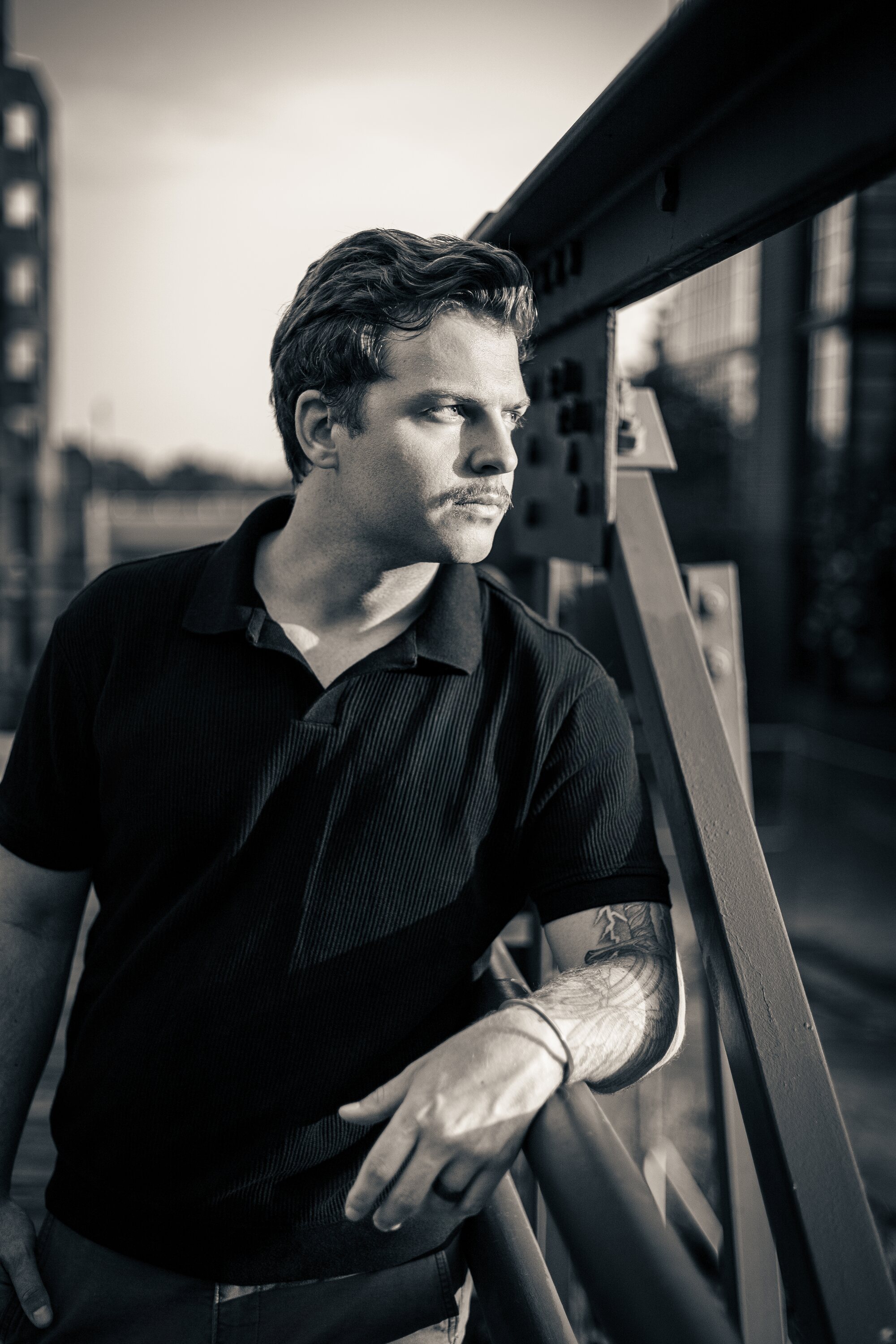
Purpose-led portraits.
Washington, DC.
01 / The opening
The local market was full of conventional headshots, broad lifestyle photography, and complicated packages. The opportunity was narrower: contemporary editorial portraits for men who care about how they present themselves but may not naturally seek out a portrait session.
The deeper insight was not simply that men want better photos. It was that many feel more comfortable wanting them when the session has a clear purpose.
02 / Positioning
Telic describes an action directed toward a definite end. It turns the customer insight into the brand itself: the portrait is not a vague exercise in self-image. It is made to do something.
03 / From hypothesis to business
Studied local competitors, customer segments, quality, pricing, and the language used to sell the category.
One clear session. A defined result. No confusing tiers, image upsells, or planning burden.
Built the name, positioning, visual system, site, and client experience around purpose and restraint.
Used sessions, inquiries, and planning questions to identify friction, refine the service, and decide what to build next.
04 / The feedback loop
Telic is a direct laboratory for questions that large companies often distribute across teams: Who is the customer? What do they truly value? Where does friction appear before, during, and after purchase? What should be built next?
One need became especially clear during portrait planning: people wanted to know whether a specific outfit would photograph well. A static style guide could offer general advice, but it could not answer the actual question in front of the customer: Will this work for me?
Positioning A narrow point of view can create more relevance than a broad list of capabilities.
Service design The product includes every interaction, not only the hour with the camera.
Customer signal Pre-session outfit uncertainty was a concrete problem inside the customer journey, not an abstract feature idea.
Product scope A repeated, specific question is a stronger starting point than a technology looking for a use.
05 / Applied AI
I built The Outfit Check, a lightweight tool embedded in the Telic customer journey. A client uploads an outfit photo and gets portrait-specific guidance on fit, color, texture, contrast, and simple changes that could improve the result.
I used AI to accelerate the product's creation and AI inside the product to evaluate the image. The important decision was not to add AI to the brand. It was to give AI one clear job tied directly to a customer need I had observed while running the business.
Shipping the tool also meant productizing the edges: a mobile-first upload flow, concise output, clear privacy language, responsible image handling, usage controls, and integration into the live Telic experience.
What this work demonstrates
Turning a personal observation into a market hypothesis.
Building the brand, offer, site, and operating model from zero.
Finding a concrete customer problem while operating the service.
Using AI to build and ship a narrowly scoped AI product with a practical purpose.
Designing for privacy, cost, misuse, and integration, not only the model response.
See the live venture